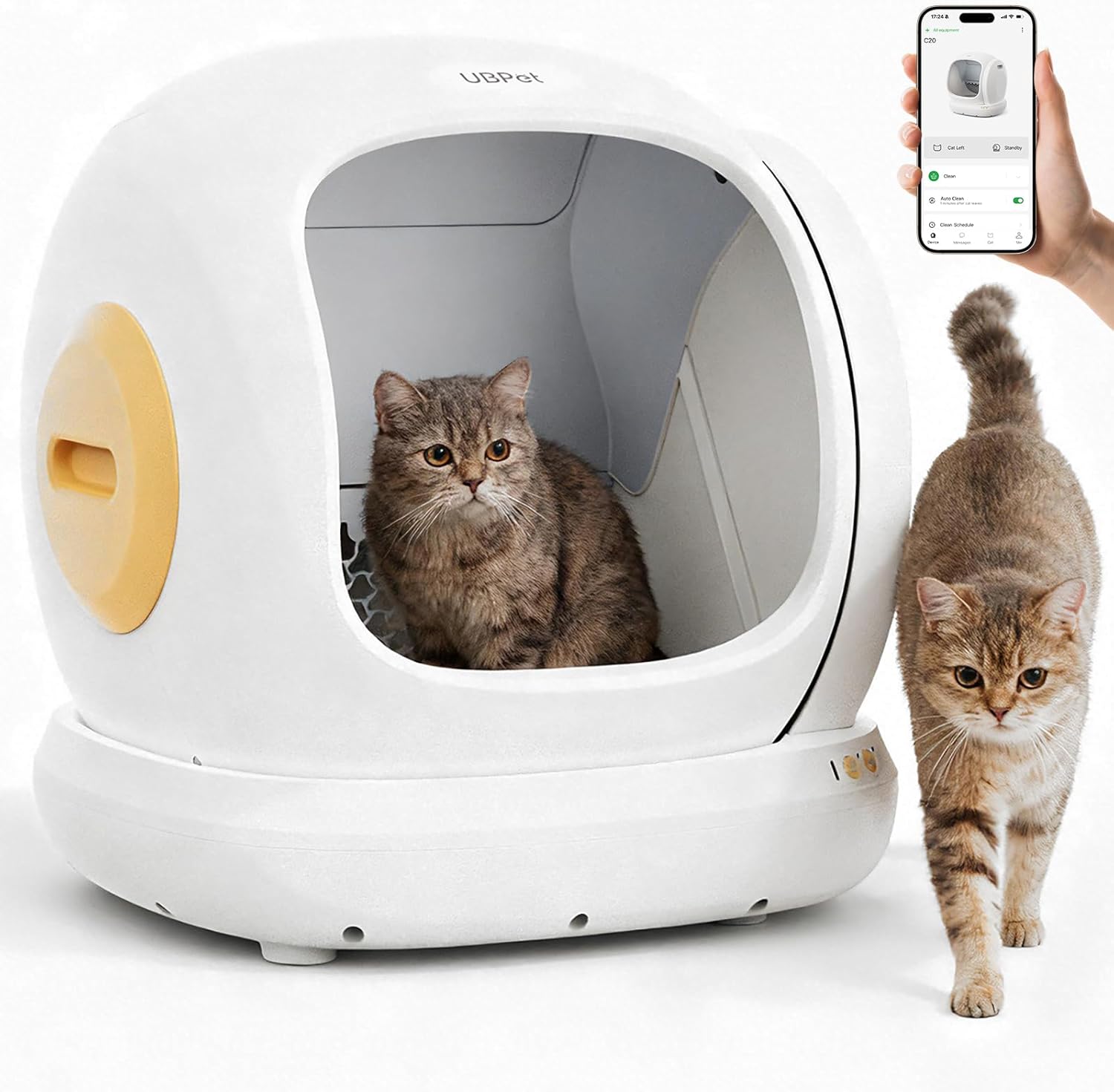
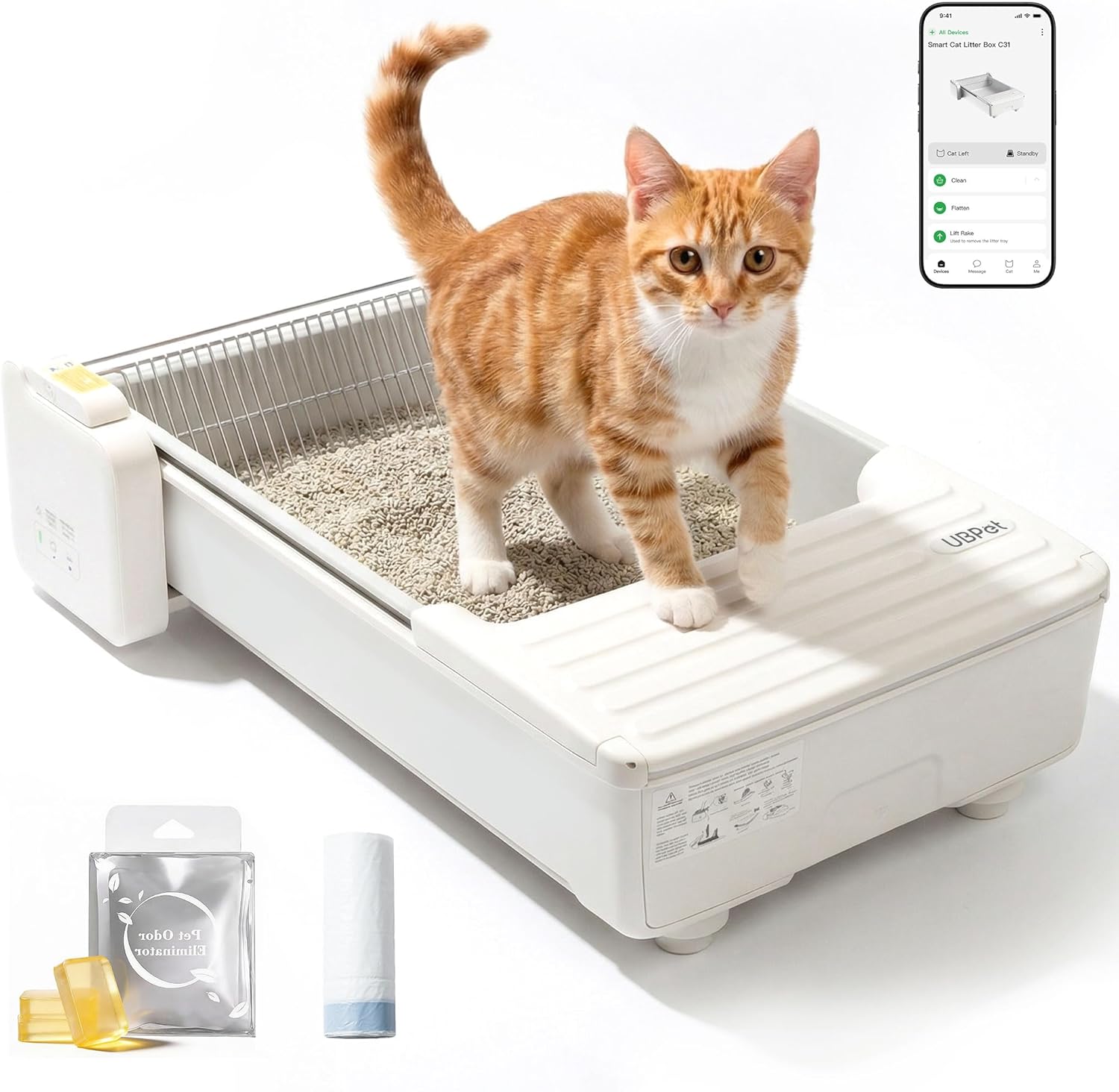
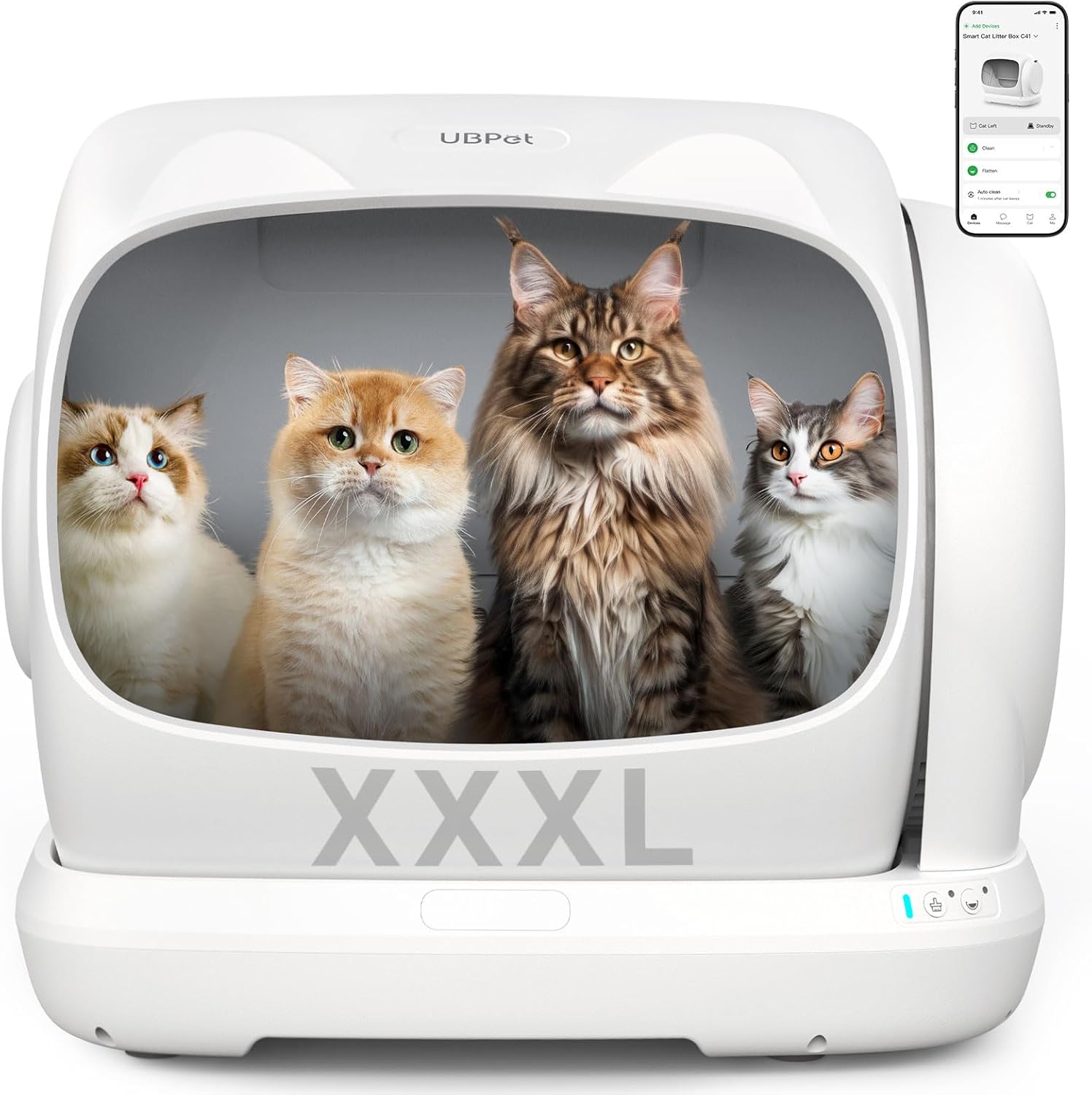
Self-cleaning litter boxes work by detecting when your cat has used the box and automatically sifting or rotating the litter to separate waste into a sealed drawer. The result is a consistently clean box without daily intervention — and significantly reduced odor compared to traditional litter boxes.
What to look for in a self-cleaning litter box
Capacity — measured in litres, this determines how much litter and waste the box can hold before requiring maintenance. For a single cat, 50-60L is sufficient. For two cats, 70-80L is recommended. For three or more cats, look for 100L+.
Entry height — low entry designs (under 7cm) are essential for senior cats, kittens or cats with joint issues. Standard entry heights suit most adult cats.
Noise level — motors rated below 45dB are considered quiet enough for nighttime operation without disturbing cats or owners. The best models operate at 40dB or below.
App connectivity — smart litter boxes with app integration allow you to monitor usage frequency, receive alerts when the drawer is full, and track your cat's toilet habits over time. Changes in frequency can be early indicators of health issues.
Safety sensors — quality models include weight sensors, infrared sensors and anti-pinch protection to prevent the cleaning cycle from starting while a cat is still inside.
Odor control — sealed waste drawers combined with carbon or gel odor neutralisers are the most effective system. Open-top designs rely more on litter quality and ventilation.
Who are self-cleaning litter boxes for
Self-cleaning litter boxes are ideal for busy cat owners who want to reduce daily maintenance, multi-cat households where boxes fill quickly, owners with mobility issues who find daily scooping difficult, and anyone who wants to monitor their cat's health habits remotely via an app.
Are they worth the investment
For single-cat households, a good self-cleaning litter box pays for itself in time saved and litter efficiency within 6-12 months. For multi-cat homes the payoff is faster. The key is choosing the right capacity for your number of cats — undersizing is the most common mistake.
⭐ Our Top Pick
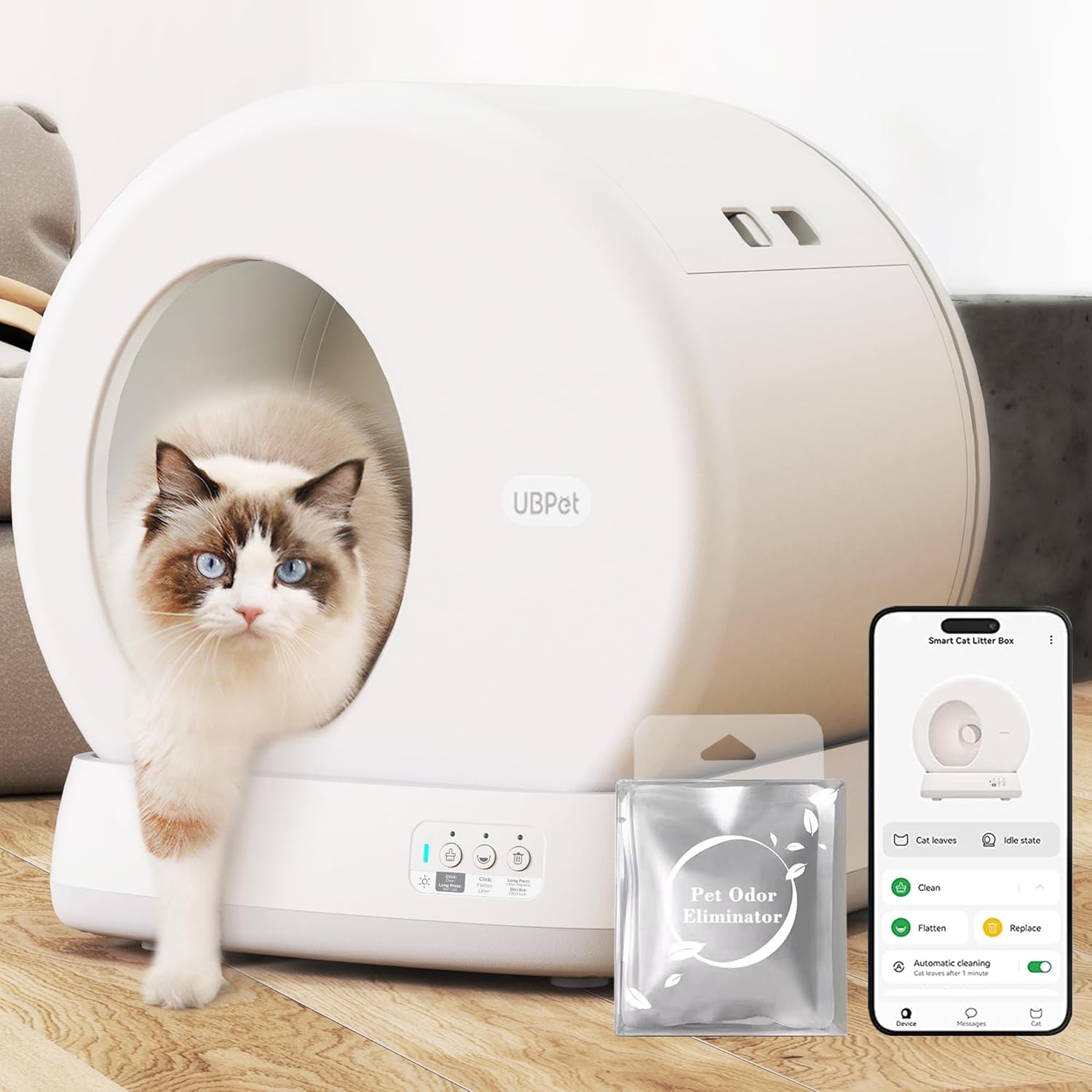
Meowant Self-Cleaning Cat Litter Box – MW-SC01
The Meowant SC01 is the best-selling model in the range and the most balanced option for single and two-cat households. The compact 56.7L globe design...
Most popular model — proven track record
56.7L capacity — suitable for 1-2 cats
Ultra-quiet 40dB motor
~$329.99
Check price on MeoWant >$329.99


